The initial idea of this blog came from some inspiration
from Inside History magazine, a gentle shove from an aunt, my great love and
enthusiasm for all things genealogy and family history and the fascination I
get from wading through old family photos. So the latter paired with my great
love of the summer season and all it brings has led me to the inevitable –
sharing family stories, myths and legends along with some sepia toned photos of
family members past and present.
All Victorian’s will know that summer has already hit us
before the official turning of the season. Yes, it seems it is going to be one
mighty hot (and humid) summer for Victorians. So, this is a great introduction
into this week’s post; warm days and summers spent with family and friends on
beaches, farms and tropical far off places.
I have been extremely lucky to be able to spend summers by
the seaside, running into crashing waves, squelching sand between my toes and
lapping up my fair share of Vitamin D. And it seems that my ancestors have had
the same inclination.
Barwon Heads
 |
| Above: Erica Russell (at left) with friends at Barwon Heads c. 1920s. |
My great grandparents lived an affluent life being
descendants of the Victorian ‘Squattocracy’. They lived and ran the property ‘Wurrook’,
which was a part of the ‘Barunah Plains’ dynasty. Their affluence led to Eric,
my great grandfather to retire early in his life, sell the farm and move to
their holiday home in Barwon Heads, which they also named ‘Wurrook’. This large
home on Flinders Parade, a few footsteps from the beach was the background for
all summers for my great grandparents, grandmother and my father and his
siblings. My grandmother Erica would ride her horses along the beach when she
was growing up; my father, his brother and sister would spend days on end over
their Christmas holidays swimming in the ocean and making sandcastles, just a
stones’ throw from watchful eyes of their grandmother.
 |
| Above: Eric Russell and Erica Wilkens with Kathrine & Andrew, Barwon Heads c. 1964. |
Anglesea & Torquay
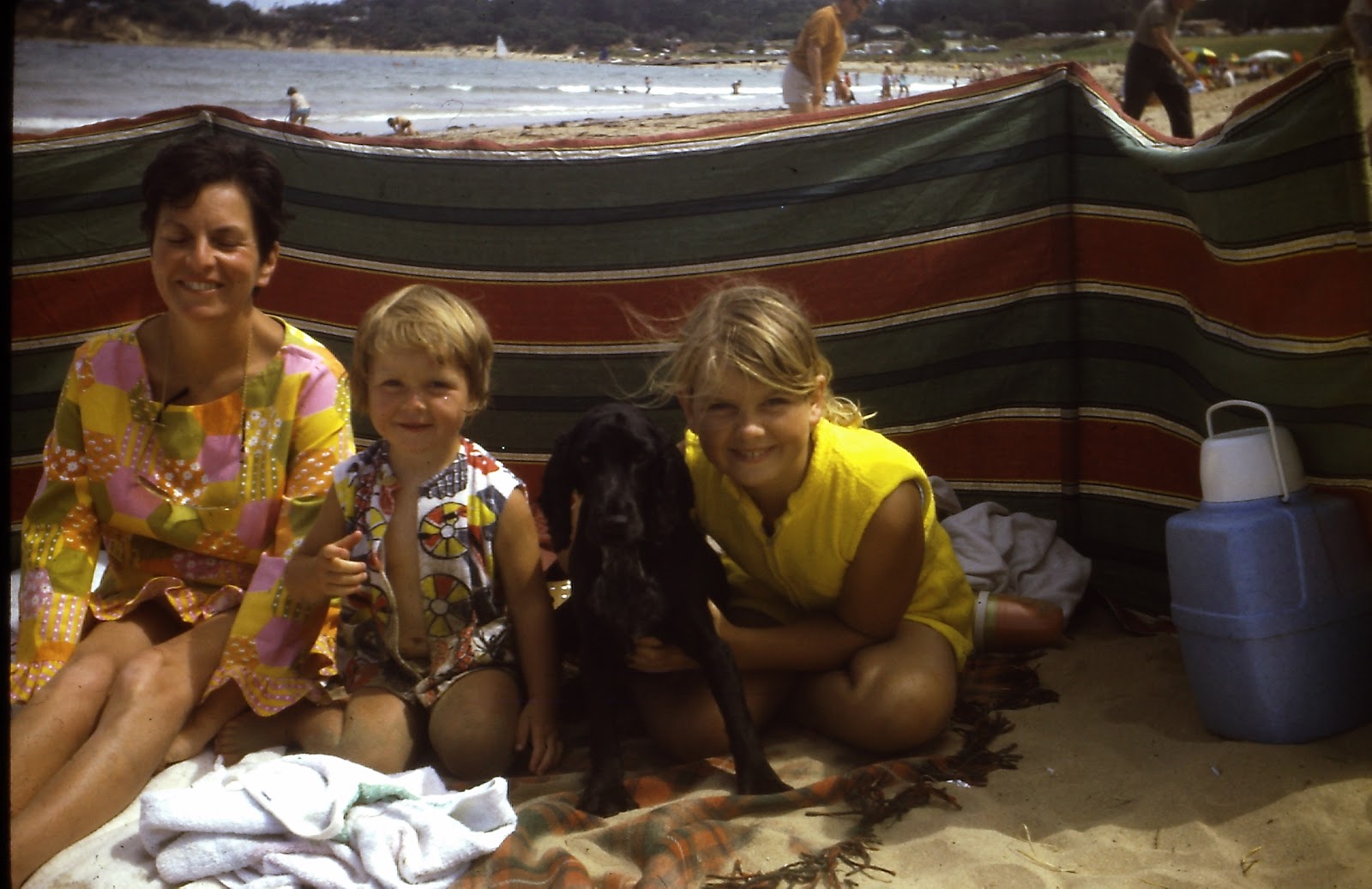
About 40kms down the road my mother and her family would
spend hot days on the beach at Anglesea. By the 1960s my great grandmother
Laura Taylor had two grown sons and several grandchildren. In the late-60s
Laura bought a small house in Camp Road, Anglesea where she and her family would
spend weekends, holidays and summers. There are many happy, colourful (and very
70s inspired outfits) of their days gallivanting in the salt waters of Anglesea
as well as Torquay.
Above: Judy Taylor with Anthea & Mandy, Anglesea c. 1969.
 Left: Lionel Taylor with baby Mandy on the beach c. 1961.
 Java, Indonesia (formerly the Dutch East Indies)

My grandfather was born and raised in the Dutch East Indies,
dark haired and olive skinned (passed down to some of his grandchildren,
including me). His days were passed in the heat and humidity which was part and
parcel of living in the tropics. Photos of sunny days show Hank and his brother
Lou climbing trees and holding monkeys. Hank’s move to Australia (I will touch
on this in upcoming blogs with new information just coming to hand) would have
seen a different kind of heat. The dry heat that he would not have been used to
in Indonesia or the Netherlands. His summer’s once in Australia would have been
spent on the farm and at Barwon Heads with his children.
Above: Helena Wilkens with sons Hendrik & Louis,
Java, Dutch East Indies, 1920s.
Preparedness
Preparation for the summer season isn’t all about having the
right pair of bathers or having enough sunscreen, for many Australians and bush-dwellers
in particular, summer brings the scary prospect of bushfires. Victoria saw the devastation
of the Ash Wednesday fires in February 1983 and the Black Saturday fires in
January 2009, but one summer that my father and his family will always remember
but like to forget is January 1969. The Lara bushfires ripped through the
township on 8 January 1969, properties, livestock, homes and livelihoods were
lost in the face of a wall of fire. They had to face
evacuations and
destruction in the wake of fierce northerly winds and soaring summer
temperatures. They were lucky to walk away unscathed, but had lost a lot in the
wake of the ferocious fire storm that ripped through the scorched land.
My ancestors may have instilled a love and history to
summers spent on the beach, but they have also infused awareness for bushfire
season and safety.

Left: Rick, Kathrine & Andrew Wilkens on the beach at
Barwon Heads shortly after the Lara bushfires, February 1969.
So, enjoy your summers, stay safe and cool in the impending
heat and have a fire plan.
Phoebe


